How to Tell if a Himalayan Salt Lamp Is Real
Practical checks that help importers and retailers tell a genuine Himalayan salt lamp from an imitation, what each check proves, and what a manufacturer should be able to show you.
Buyers often ask how to tell if a Himalayan salt lamp is real. There is no single test that proves it. A home test can show whether a lamp is made of salt, but it cannot show where the salt was mined. For an importer, the most reliable answer comes from combining a few simple physical checks with clear information from the manufacturer about where the rock comes from and how the lamp is made.
This guide explains the checks we recommend to buyers, what each one can and cannot tell you, and what a genuine manufacturer should be able to show you before you place an order.
What “fake” can mean
When buyers worry about a fake salt lamp, they usually mean one of three different things:
- The lamp is not salt at all. It is made of resin, glass, plaster or another material shaped and coloured to look like rock salt.
- The salt is not Himalayan rock salt from Pakistan. It is real salt, but from another source, sold under the Himalayan name.
- The electrical parts are unsafe. The salt may be genuine, but the cord, switch or bulb holder is poor quality or not certified.
Each problem needs a different check. Physical tests help with the first, supplier information helps with the second, and certification of the cord set helps with the third.
Check colour, texture and glow
Natural Himalayan rock salt is not a uniform material. Look for natural variation in colour and veining across the lamp, from pale tones to deeper pink, orange or red, sometimes within one piece. Natural-shape lamps have an irregular, hand-carved surface, and no two pieces should look exactly the same. A perfectly even colour, a glossy plastic-like surface, or a batch of identical pieces deserves a closer look.
When the lamp is lit, a genuine salt lamp gives a warm, diffused glow, brighter where the salt is thinner or paler and darker where it is thicker or more strongly coloured. Brightness alone is not a pass or fail test: a pale or thin lamp can glow quite brightly and still be real salt.
Colour is also not proof on its own. Rock salt from the Salt Range occurs in several natural colours. We supply natural lamps in Natural Pink, White, Grey and Dark Red up to 10 kg, and larger lamps in Natural Pink, so a white or grey lamp is not a sign of a fake.
Check weight and feel
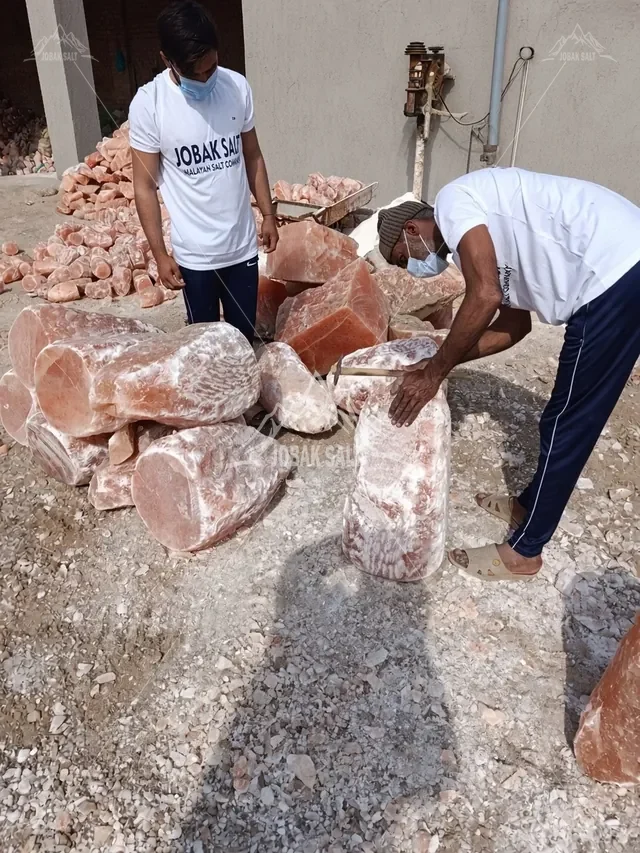
Solid rock salt is dense, so a genuine lamp feels heavy for its size. A lamp that feels surprisingly light may be hollow or made of another material. Because natural lamps are sold in weight bands, weighing a sample against the band you ordered is a simple, useful check; see our salt lamp size chart and weight guide for the bands we make.
Real salt is also brittle. It can chip or crack if it is dropped or knocked, which is why every lamp we ship is packed in its own carton.
What the moisture test shows
Salt dissolves in water and attracts moisture from humid air. That gives a simple test: wipe a small, hidden area with a barely damp cloth. Real salt will dissolve slightly at the surface and may leave a trace on the cloth. Resin or glass will not react; water simply sits on top. Dry the area afterwards, and never wet the lamp near the bulb or the electrical parts.
Be careful with the opposite conclusion. Genuine salt lamps can “sweat” in humid rooms, but a lamp that stays dry in a warm, dry room is not fake. Sweating depends on humidity and temperature, not on authenticity. Our salt lamp care guide explains sweating in more detail.
Remember what this test proves and what it does not. It shows that the material is salt. It cannot show where the salt was mined, so for origin you need information from the supplier.
Check the origin and the supplier
For a wholesale order, origin is a supply chain question, not a home test. A genuine manufacturer should be able to tell you clearly where the rock comes from, where the lamps are carved, and what documents come with the shipment. These are the facts we share with buyers:
- Mine source: our rock salt is selected at the Warcha Salt Mine in District Khushab, Pakistan, in the Salt Range, where we hold our own lease.
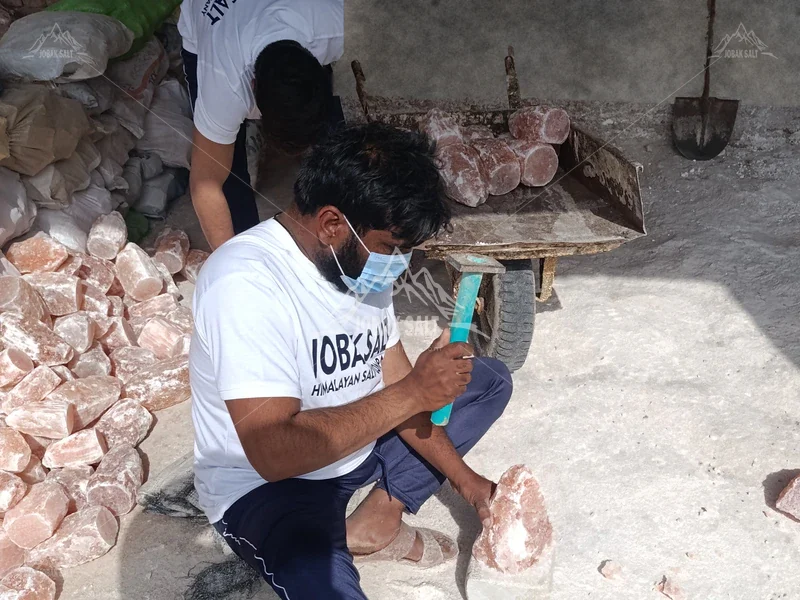
- Factory: lamps are carved and finished in our own units next to the mine. Buyers are welcome to arrange a visit; see manufacturing.
- Documents: each export shipment carries a Bill of Lading, Commercial Invoice, Packing List and Certificate of Origin. We are registered under the REX system for statements on origin for eligible shipments.
- Quality system: we hold ISO 9001:2015 and HACCP certification, and a PCSIR laboratory test report is available on request; see quality and certifications.
Be cautious with sellers who will not name a source, who describe the lamp only in vague marketing language, or who rely on health promises instead of product facts. Health claims are not evidence that a lamp is genuine, and we do not make them.
Why a real lamp may not match the photo
Natural-shape lamps are carved one at a time from individual pieces of rock, so the lamp you receive will not be identical to a catalogue photo. Shape, colour depth, veining and the way the light passes through the salt all vary from piece to piece. This variation is a sign of a natural product, not a defect. When you order in volume, judge a shipment by whether the pieces match the agreed weight band, colour and finish, not by whether each one looks exactly like the sample. Crafted designs such as pyramids, spheres and animal shapes are cut to a set design, so their outlines are more consistent, but colour and veining still vary.
Check the electrical parts
A lamp can be genuine rock salt and still have a poor cord. Check the electrical parts as you would for any lamp: the cord, plug, switch or dimmer, and bulb holder should be sound and certified for your market. Our mains lamps come with a CE certified salt lamp cord set and bulb, with plugs for the buyer’s market on request. The salt lamp bulbs and cord sets guide lists the cord sets, plugs and bulbs we can supply.
Importer checklist
- Natural colour and veining, with variation between pieces.
- An irregular hand-carved surface on natural-shape lamps.
- Weight that matches the ordered weight band.
- A surface that reacts to a barely damp cloth (tested on a hidden spot).
- A named mine source and factory, and a Certificate of Origin with the shipment.
- A certified cord set with the right plug for your market.
- Product descriptions without health or medical claims.
If you are comparing suppliers, our guide on how to choose a Himalayan salt supplier in Pakistan covers the wider checks, and the salt lamp wholesale buying guide explains what to specify on an order. Browse our natural Himalayan salt lamps, geometric lamps and animal shaped lamps.
Related guides
- Salt lamp size chart and weight guide
- Salt lamp care: sweating, cleaning and storage
- Salt lamp bulbs and cord sets
Published by JOBAK SALT · Updated 20 November 2026
Frequently asked questions
Can’t find your answer? Message our sales team directly.
Is there one test that proves a salt lamp is real?
No. A damp-cloth test can show that a lamp is made of salt, but no home test shows where the salt was mined. Combine physical checks with origin information and documents from the supplier.
Does a real salt lamp always sweat?
No. Genuine salt lamps can sweat in humid rooms, but a lamp that stays dry in a warm, dry room is not fake. Sweating depends on humidity and temperature.
Are white Himalayan salt lamps real?
Yes, rock salt from the Salt Range occurs in several natural colours. We supply natural lamps in Natural Pink, White, Grey and Dark Red up to 10 kg.
Where does JOBAK SALT’s rock salt come from?
From the Warcha Salt Mine in District Khushab, Pakistan, in the Salt Range, where we hold our own lease. Lamps are carved in our own units next to the mine.
What documents prove origin for an import?
Each export shipment carries a Certificate of Origin together with the Bill of Lading, Commercial Invoice and Packing List. We are also registered under the REX system for eligible shipments.
Can we visit the factory before ordering?
Yes. Buyers are welcome to arrange a visit to our units near the Warcha Salt Mine. Contact our sales team to schedule it.
Source genuine Himalayan salt lamps direct from the mine
Tell us which designs, sizes and quantities you need. We will respond with wholesale pricing, packing options and lead times.